





MaxDiff Analysis Tool

Quickly go from experimental design, to analysis, to interactive report in one tool. Displayr automates all the painful manual steps – making MaxDiff a piece of cake.

displayr-maxdiff-happy-client
Brand Engagement Frequency
Trusted by 2,900+ research teams worldwide

Maximize insights
with MaxDiff analysis

Max Diff - Experimental design made easy

Experimental design
made easy

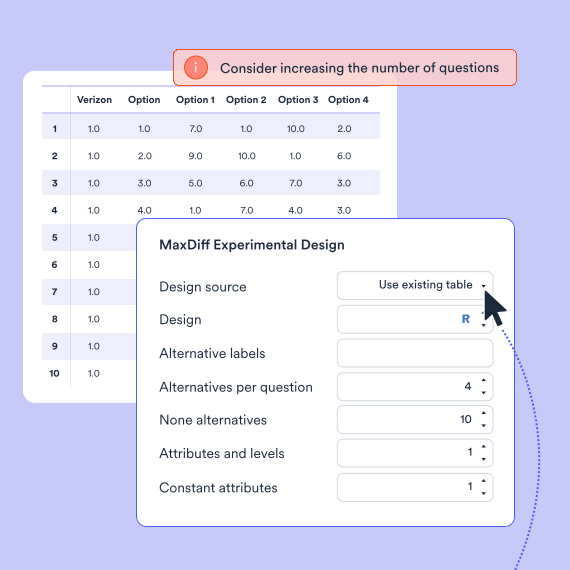
Step one for any MaxDiff is to create your experimental design. It’s the set of instructions about which questions to ask which people. You can create it in Displayr with the click of a button. Displayr will coach you through, so you won’t make silly mistakes. It really is that simple!

MaxDiff software

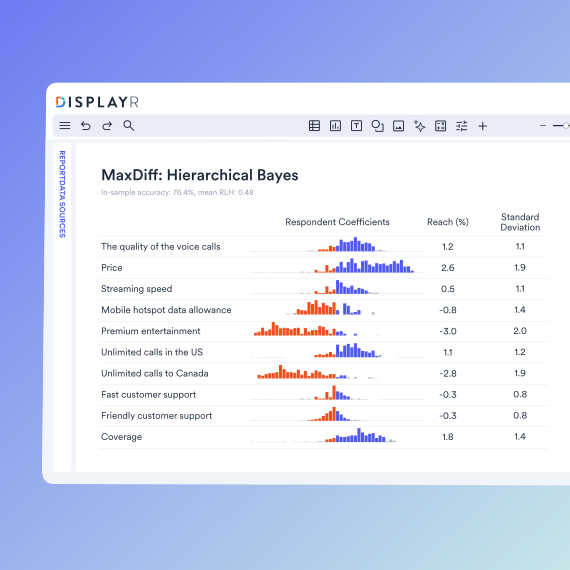
Displayr automates all the painful steps of MaxDiff analysis into a series of button clicks. It even coaches you to a better way of doing things, ensuring you get accurate results quickly. Easily interpret results with color coded summaries or extract the utilities as variables and perform other analyses.

Max Diff - MaxDiff analysis
Max Diff - Reporting MaxDiff

Reporting MaxDiff

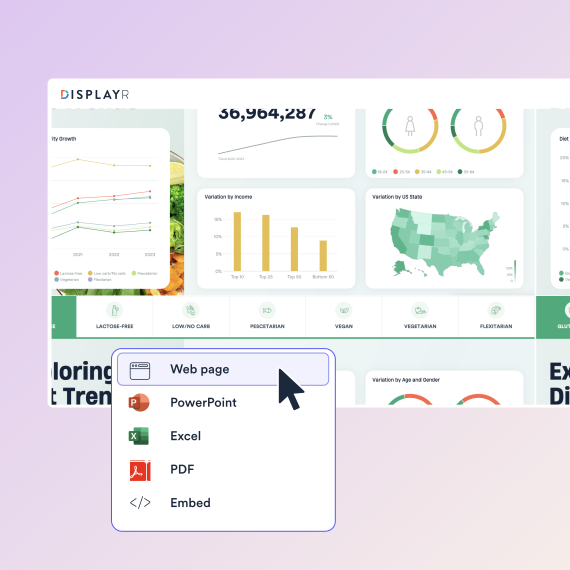
Displayr is also great for reporting MaxDiff results. So you can quickly create visualizations of the MaxDiff, or use your MaxDiff utilities as an input into other analyses like segmentation, TURF, or crosstabs.

Elevate your analysis beyond MaxDiff

Displayr is not just a MaxDiff platform; it excels in every aspect including visualization, trend analysis, crosstabs, advanced analytics, dashboards, PowerPoint reporting, data apps, and more. Once you have your MaxDiff analysis, you can seamlessly integrate it into your reports and even update everything automatically with new insights.

Displayr product - Professional quality reporting
Displayr is extremely powerful and extremely intuitive. It can do vastly more analysis more efficiently than any of the tools I’ve tried in the past.
Ron Gailey
Ron Gailey

President – Americas, MDI
10x faster MaxDiff analysis

Displayr works with all types of data

All types of data

SQL, databases, Excel, CSV, text, SPSS, survey platforms, APIs, integrations, & more.
Displayr support all types of analysis

All types of analysis

Summary tables, crosstabs, pivot tables, regression,
text analysis, segmentation, machine learning, & more.
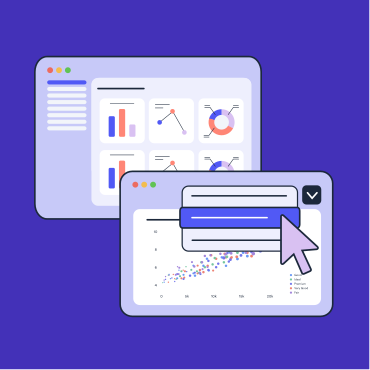
Illustration for displayr all types of reporting

All types of reporting

Data visualization, interactive data apps, dashboards, presentations, PowerPoint, Excel, PDF, web pages, & more.

Integrated AI

Integrated AI

Displayr’s Research Agents integrate AI across your full workflow, from data cleaning to analysis to reporting.

Case Study - Choice Based Market Insights

Global Market Research Agency

Displayr helps Choice Based Market Insights pinpoint insights in record time

Challenges

  • Losing time to switching between multiple tools
  • Lengthy and tedious manual workflow processes for re-running segments and analyses

Solutions

  • Dashboard solution that automates manual processes
  • All-in-one software

Results

  • Reduced analysis time by more than 50%
  • Streamlined workflow from using three tools to just one

“I'll never forget this MaxDiff project in which I had budgeted a whole day to run the analysis. I was done in an hour and a half.”
Miklos Kremser
Miklos Kremser
Founder of Choice Based Market Insights

See why people love Displayr

MaxDiff analysis FAQs

What is MaxDiff?
MaxDiff analysis, also known as best-worst scaling, is a research technique for measuring relative preferences. In other words, what do people like the most? Then the second-most? Then the third-most? And so on? It helps rank attributes, features, or ideas based on their relative importance to customers.
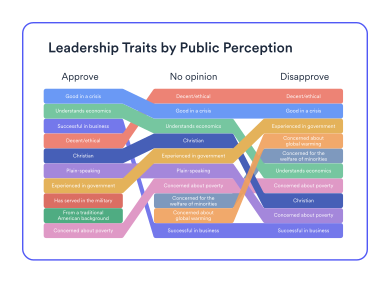
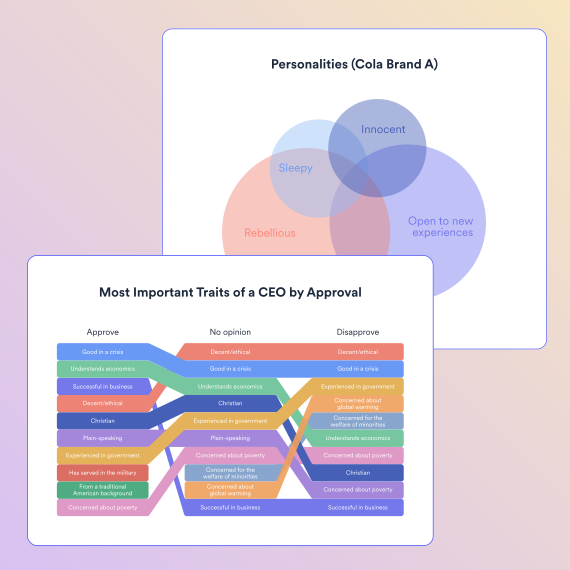
MaxDiff is a great analysis tool in any instance where you need to work out the relative preferences. The obvious use cases here are things like pricing options, product features, brand attributes, or marketing messages. It can also be used to identify attributes the public wants to see from a political leader.
MaxDiff ranks individual attributes by importance or preference, whereas conjoint identifies how certain combinations of attributes influence choices.

Some benefits of MaxDiff to consider include:

  • It is easy for respondents to understand, avoiding long lists.
  • Helps reduce response biases when compared to traditional rating scales.
  • Provides ratio data.

The premise of a MaxDiff survey is fairly straightforward. Respondents are shown a list of features and asked to choose what is most and least important to them. Some tips for maximizing the success of your MaxDiff survey include:

  1. Define the list of items you want to test.
  2. Group the items into smaller sets (4-6 per set is common).
  3. Ask respondents to choose the most and least important items from each set.
  4. Analyze the results using MaxDiff analysis software to rank the items by preference.
Yes, tools like Displayr allow for automated MaxDiff analysis. They handle tasks such as data integration, advanced analysis, and visualization, making it faster and easier to gain actionable insights from your data.

The best MaxDiff analysis tool is one that handles the whole process (experimental design, analysis, and reporting) without forcing you to stitch together separate tools or write code. Displayr does all three in one place: it generates the experimental design, runs the analysis (including advanced methods like Hierarchical Bayes), and turns the results into interactive reports automatically. For most researchers, that end-to-end workflow makes it the most practical MaxDiff analysis tool available.

Yes. Displayr is MaxDiff software built for researchers, not programmers, you can design a MaxDiff study and analyze the results with no coding at all. Everything is point-and-click, from setting up the experimental design to producing utility scores and preference shares. If you do want to customize with R, you can, but it’s never required.

Yes: automating MaxDiff is exactly what Displayr is built for. Once your data is connected, the analysis updates automatically, so re-running a study or refreshing results with new data doesn’t mean starting over. Your charts and reports update themselves, which removes the slow, manual steps that usually make MaxDiff analysis painful.

The right dashboarding software will depend on your data sources, skillset, time constraints, and budget. Displayr, with its no-code capabilities and R code compatibility, caters to users of all abilities. Its drag-and-drop tools ensure that you can create a dashboard quickly if necessary.

No. A common frustration is using one tool to build the MaxDiff experimental design and another to analyze the results. Displayr handles both — you create the design and analyze the responses in the same platform, then report on them without exporting anything. You can try it free before committing.

Your Displayr deep dive starts here

Chat with us